
The Drive is an advanced storage system and the starting point for organizing and managing your data in DataTile. It contains all entities that have ever been uploaded, created, or shared with you, and provides detailed information about each file. From the Drive, you can review and organize uploaded data, edit entity details and attributes, and prepare your data for further work in DataTile.
The DataTile Drive uses a folder-based structure, allowing you to organize entities into folders and subfolders for easier navigation and data management. Folders are organized in the left pane. Here you can start creating any new entity by clicking the ‘Create new’ button (1).
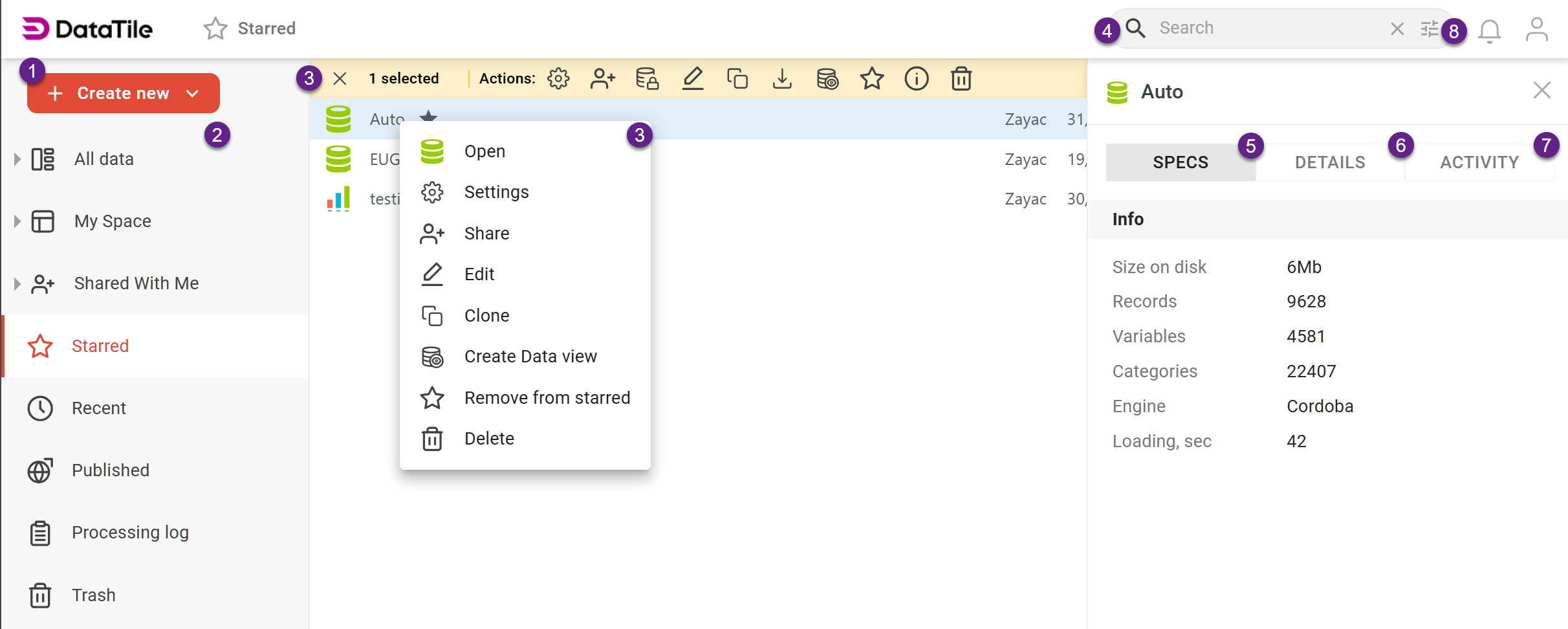
Folder-based sorting (2)
-
All Data: This is the default folder that includes the contents of both 'My Space' and 'Shared with me' folders. It's the starting point for newcomers when they first begin working in DataTile. If you haven’t created any entities yet, you’ll only see the entities available to all users.
-
My Space: The primary folder where all your uploaded datasets and created entities are stored.
-
Shared with me: Contains entities created by other users that you have been granted access to, including datasets designed for training in the sandbox environment.
-
If there are too many entities, you can narrow down the list by adding items to your favorites and creating a Starred collection.
-
Entities you've worked with recently are stored in the Recent collection.
-
The Published folder contains all entities published outside of DataTile.
-
Deleted entities are moved to the Trash folder, where they are stored for 30 days unless permanently deleted earlier. During this period, they can be restored at any time. You can also permanently delete individual files from Trash or empty the entire folder with a single click.
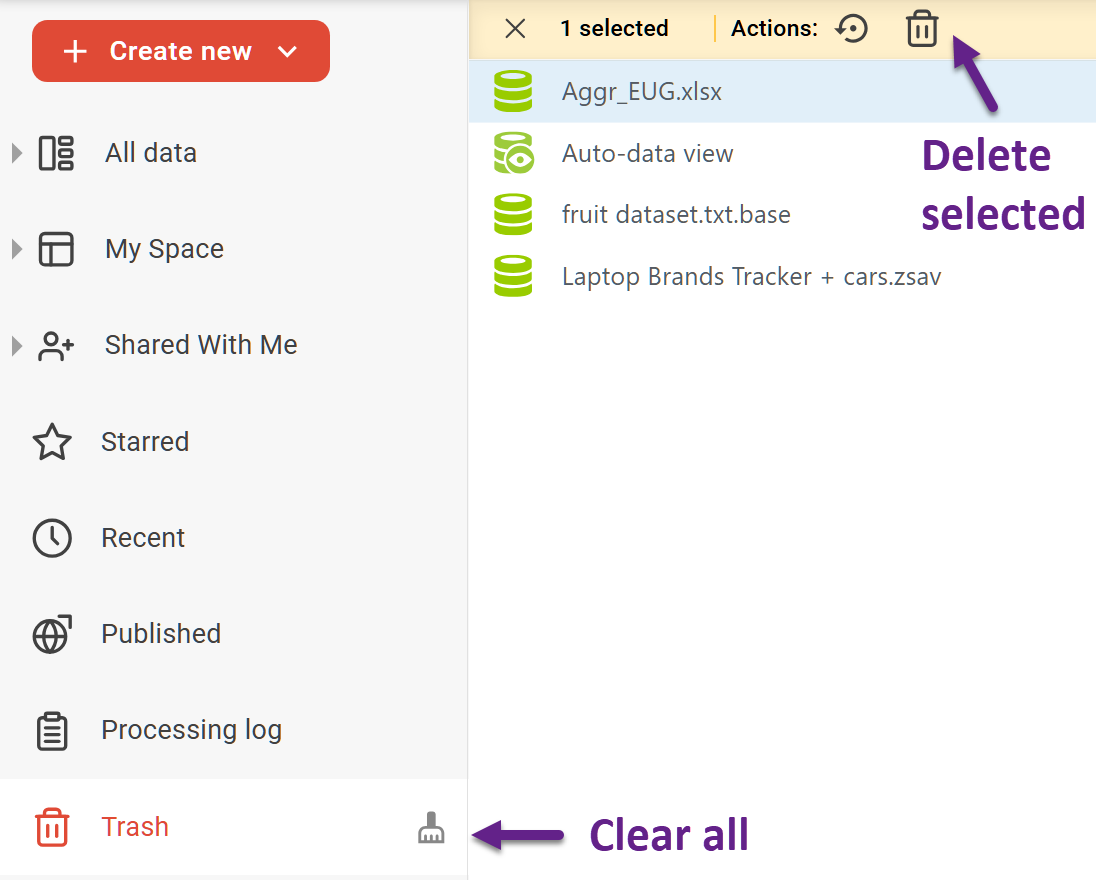
Menu (3)
When an entity is selected, the top menu becomes available, offering options specific to that entity type. Right-clicking opens a quick menu with the most commonly used actions.
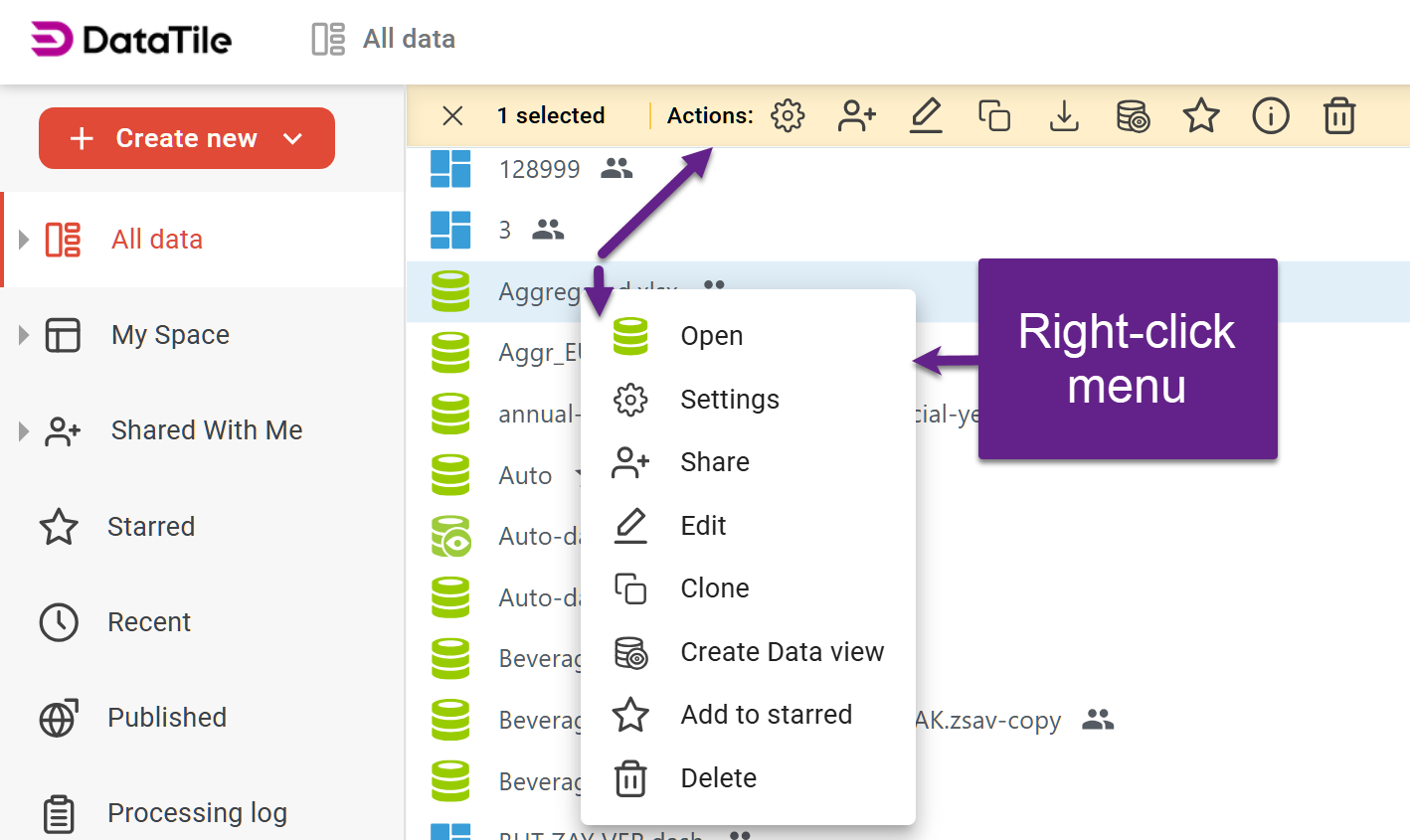
When multiple items are selected, only the ‘Delete’ option is available.
Search (4)
Clicking the search icon opens an input field. Search is performed within the current folder after you enter at least three characters. The search is case-insensitive and matches any part of an entity’s name.
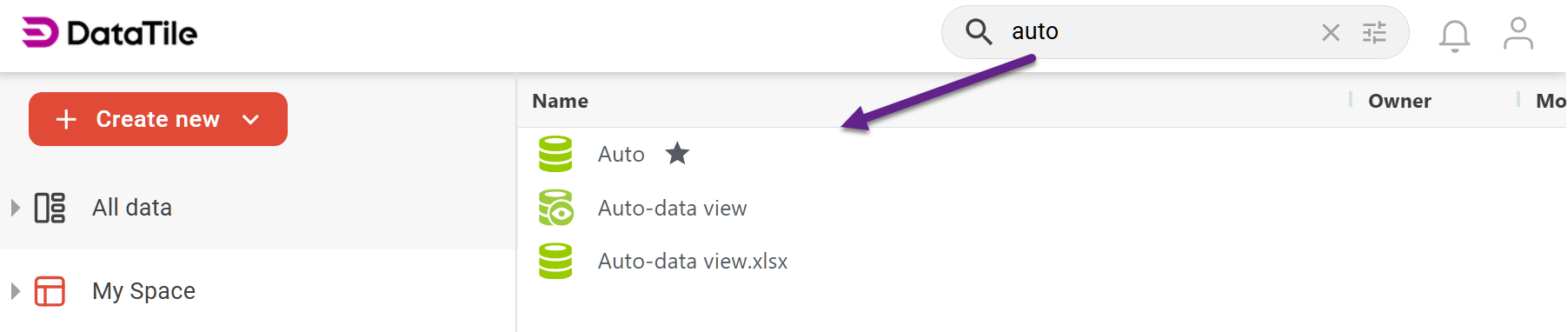
The search is performed only within the current folder.
Information panel
Complete information on each file is indicated in the specifications, details, and activity tabs.
-
The ‘Specs’ tab (5) contains information about the file itself, mostly useful for databases.
-
The ‘Details’ tab (6) provides expanded information about the related entities (see below).
-
The ‘Activity’ tab (7) contains the usage statistics for the past 30 days and the history of actions (creation, ownership, sharing, etc.) for the last 3 months.
More detailed activity statistics for other periods (up to two years) can be viewed and downloaded from the Activity tab in the database settings.
Details and attributes (6)
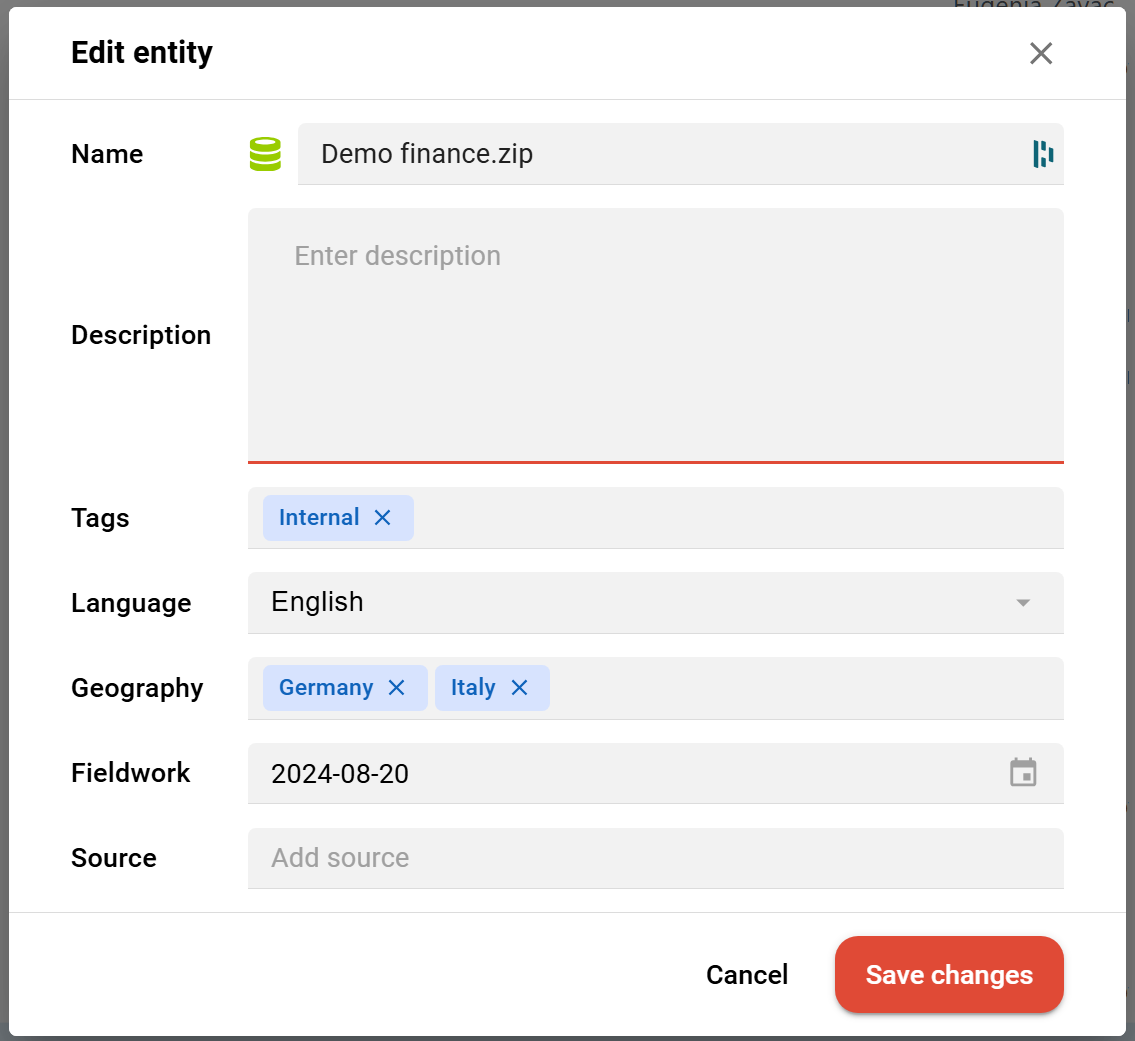
You can assign a set of useful attributes to each entity in your Drive. This is optional, but it can help you organize your content and make it easier to find the files you need later. This metadata is especially useful for databases.
To add or edit any of these details, select an entity and click the ‘Edit’ option in the menu.
-
Custom description — an optional free-text field for any additional information about the entity.
-
Tags — tags used to classify and organize entities. You can assign multiple tags to the same entity. Tags are shared across the server and visible to all creators, so we recommend creating a consistent corporate tagging system and sticking to it.
-
Language — the language associated with the entity or its data. The list of available languages can be expanded based on client requests while remaining centrally managed.
-
Geography — countries associated with the entity. You can select multiple countries, which is useful for multi-country studies.
-
Fieldwork dates — specify the fieldwork period manually. These dates are independent of when new waves or files were uploaded.
-
Data source — the source or provider of the data. Use this field to specify where the data comes from, for example, a panel provider, syndicated study, or internal source. Also, the field can be used in any way that works best for your projects.
All these attributes can be seen in the Details tab of the Info panel.
Advanced searching (8)
Along with the regular search, you can use Advanced search to filter entities by their metadata. Click the ‘Advanced filters’ icon on the right side of the search field and select or enter the attributes you want to use as filters.
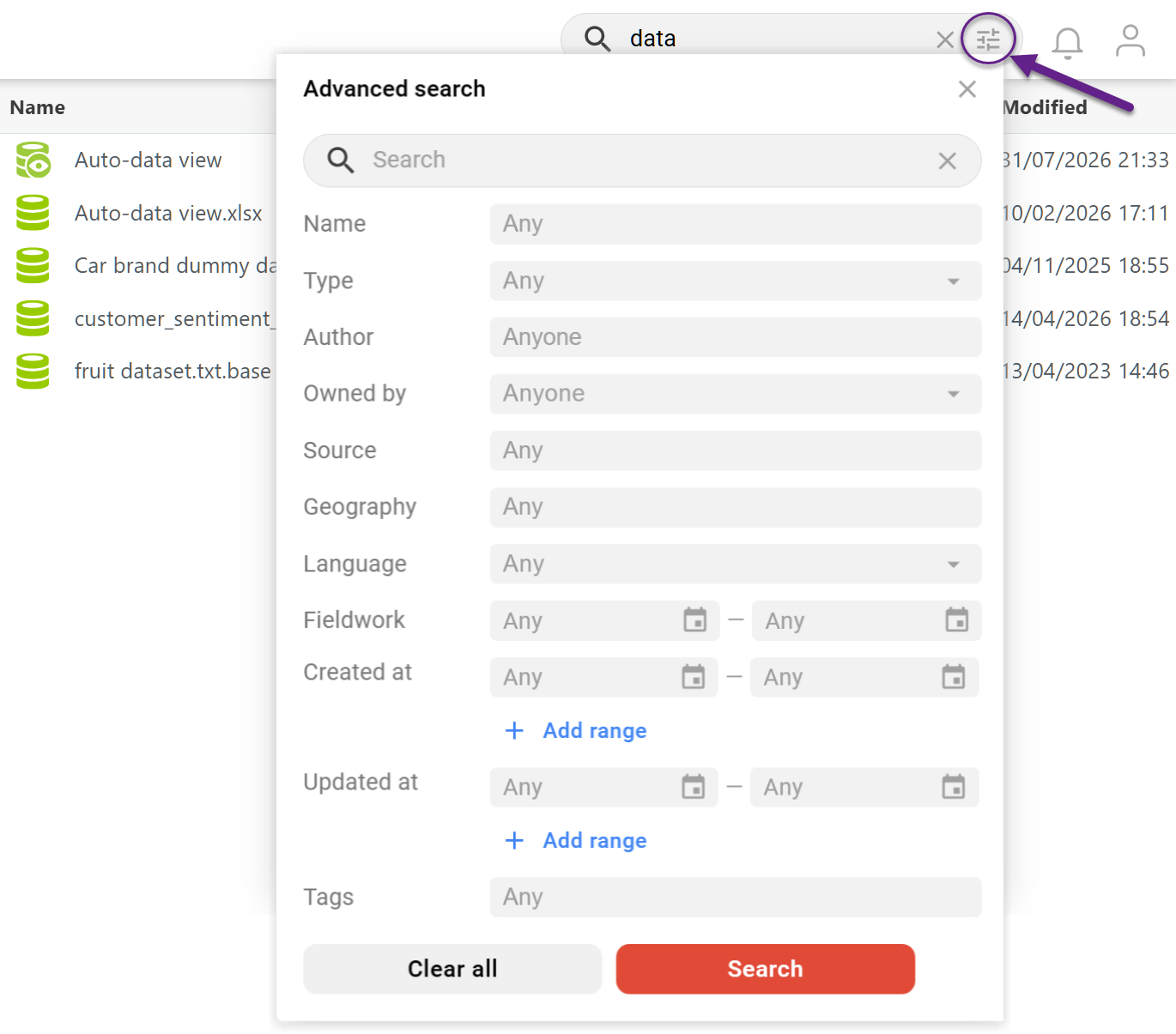
Click ‘Search’ to apply the selected filters. The search itself is performed only within the current folder.
While filters are active, the ‘Advanced filters’ icon remains red.
To reset the filters, open the Advanced search panel and click ‘Clear all’.