
DataTile supports the use of pre-calculated weighting factors. A weighting factor is uploaded as a separate variable in the dataset and can then be assigned as the active weight in the Meta-Editor.
Setting up weights consists of four steps:
-
Import a dataset containing one or more weight variables.
-
Declare each weight variable in the Meta-Editor.
-
Configure database weighting settings.
-
Apply weights during analysis.
How to declare a variable as a weight
-
Go to the Project settings → Meta-Editor.
-
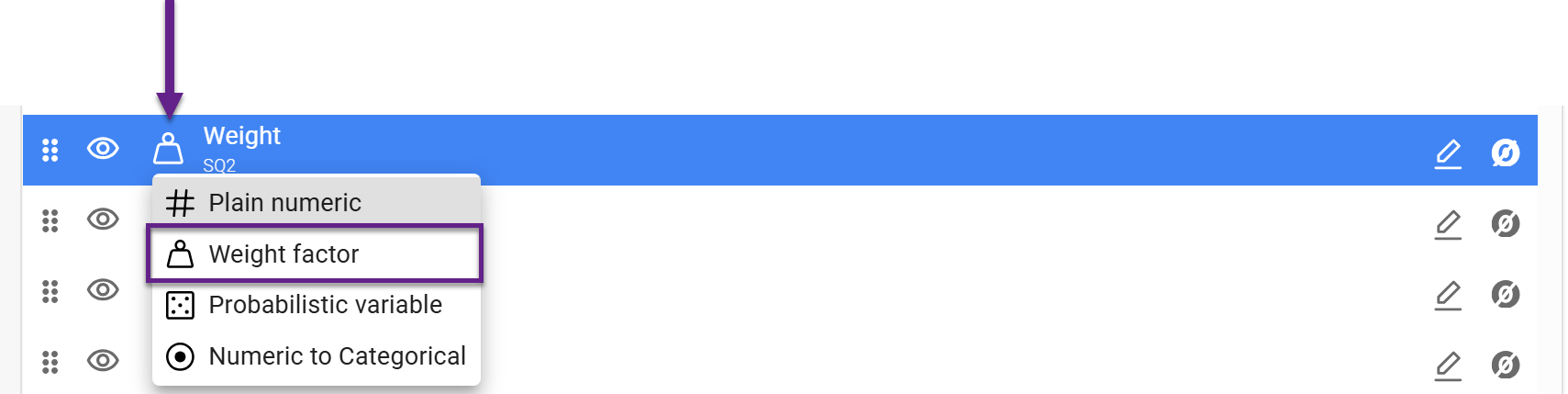
Locate the variable and click its icon.
-
From the pop-up menu, choose ‘Weight factor’.
-
Hide the variable by clicking on the eye icon on the left, because it won’t be needed for the analysis as a plain numeric variable.
Repeat this process for the other weighting variables.
Weights settings
Having declared weights in the database, you can further enhance the user experience.
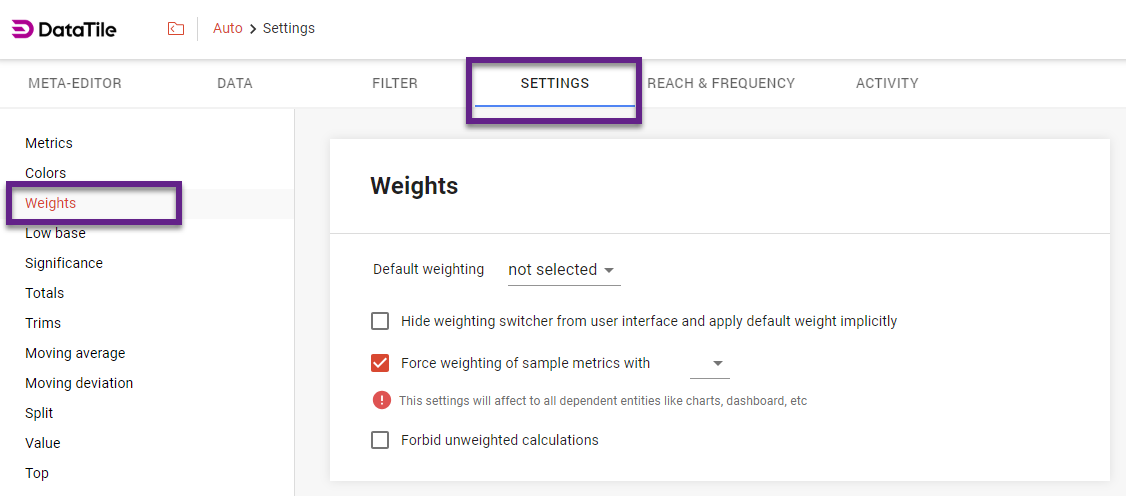
Go to Project settings → Settings → Weights
-
Default weighting defines the default weight to apply to new runs. Use this option when most analyses should use the same weight automatically.
-
Hide the weighting switcher from the user interface and apply weight implicitly: recommended for dashboards intended for business users who should always see weighted results. This tick hides the weighting switcher from the user interface, enforcing the default weight to be used for all runs under the hood.
-
Force weighting of sample metrics: this weight will be applied to all sample metrics, disregarding the user-selected weight. Useful when sample-size metrics must always represent weighted populations, regardless of the weight selected by the user.
-
Forbid unweighted calculations: if this option is selected, users can switch weights, but untoggling the weighting switcher is forbidden. Use this setting when unweighted results are considered invalid or should not be available to end users.
Managing multiple weights
A database may contain several weight variables for different reporting scenarios. You can enable only the weights relevant to a specific dataset or Data View while keeping the others available for different audiences.
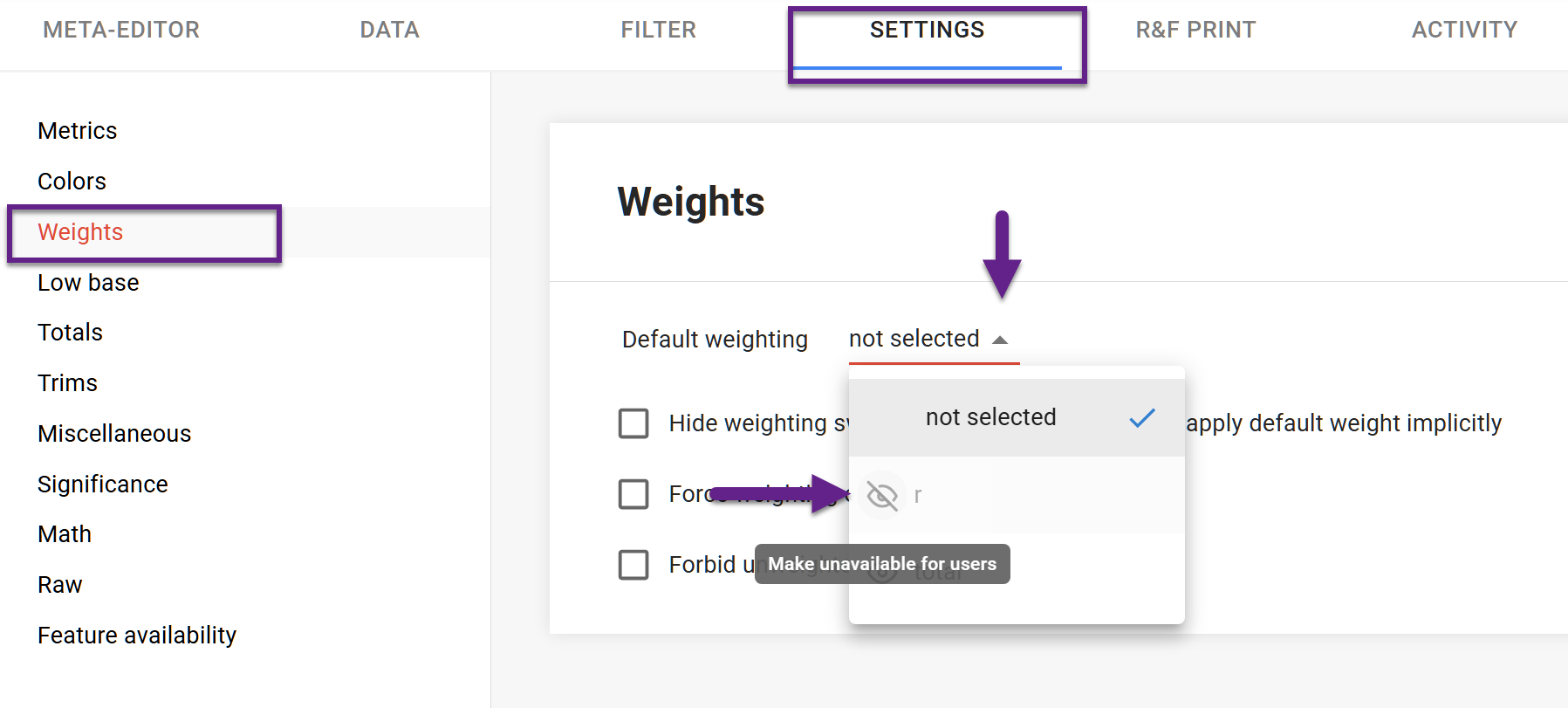
To do this, you should disable irrelevant weights at the dataset or Data View level without changing the variable type. Open the dropdown list and click the ‘eye’ icon to manage their visibility. Disabled weights cannot be selected for calculations or set as the default weight.
FAQ
Do weights modify the original data?
No. Weighting changes calculations only. The original dataset remains unchanged.
Can I have more than one weight?
Yes. A database may contain multiple weight variables.
Can users switch between weights?
Yes, unless the weighting switcher is hidden or unweighted calculations are forbidden.
What happens if I don't declare a weight variable?
The variable is treated as a regular numeric variable and cannot be used for weighting calculations.
Related articles
Weight Application in Control (dashboard-specific weighting)